Friday, September 28, 2012

Hope for a democratic Zimbabwe?

President Robert Mugabe has been the president of Zimbabwe since the state was granted independence in 1980. The 88 year old president has anything but a clean past with running a state with free and fair democratic elections. Accordingly, he denies the countless accusations and insists that he has never rigged previous elections in Zimbabwe. However, there have been numerous reports that rival party, Movement for Democratic Change, won the 2005 election with the majority of the vote yet failed to take power. Unfortunately for the MDC, violence and intimidating quickly stopped these "lies". Then in 2008, leader Morgan Tsvangirai backed out of running, due to attacks on his supporters from Mugabe's armies and militias. More recently, violence from Mugabe has slowed and talk of a new election with a new constitution has come about. 
Mugabe and the MDC have agreed on a "power-sharing government", mostly due to the lack of growth in Zimbabwe's economy. In order to avoid a repeat of the 2008 unfair and unfree elections, Tsvangirai, with support of South African mediators, is pushing for a new constitution before the next election. By-elections for empty seats were supposed to happen this past August, and then put off to October 1st. Yet now, Mugabe claims that these elections will cost too much with more important elections coming up soon. By saying this, Mugabe is hinting toward actual (perhaps free and fair?) elections that Zimbabwe has been waiting for, well, since Mugabe took power. Supposedly there will be an election held between Mugabe and Tsvangirai this next year in March 2013.
This issue is incredibly relevant to our class discussions from these past couple of weeks, concerning post-independent authoritarian regimes and attempts to democratize a state. We see Zimbabwe and question if they are a democratic state. From the reading "Emerging Democracies", Radelet discusses three important requirements for democracy: the transition for an individual "big man" in power to institutionalization of power, enforced civil liberties and political rights for citizens, and growth in civil society groups, NGOs, etc. When we look at Zimbabwe, there is still a "big man" in power (hint: Mugabe), there are civil liberties and rights because we see the public allowed to vote-yet there is evidence that elections are rigged, and there is an absent of major growth in the above groups. Perhaps Zimbabwe is pushing toward actual consolidated democratization and perhaps if elections that Mugabe alluded to in March will be the next step. Only time will tell. _63147840_63147835.jpg
Sources:
"Zimbabwe's Robert Mugabe hints at March election" BBC News. 28 Sept 2012. http://www.bbc.co.uk/news/world-africa-19741673.
Freedom in the World 2012: "Zimbabwe" Freedom House. http://www.freedomhouse.org/report/freedom-world/2012/zimbabwe.
"Emerging Democracies" Emerging Africa. Radelet 2010.


Thursday, September 27, 2012

Right vs. Privilege: Africa’s Health Care


One of the most prevalent issues condemning Africa today is that of health care. The lack of health care throughout Africa is not only depleting the population, but it also places ramifications on the government that harbor very unstable conditions. I chose the topic of public health because I believe that health care concerns are what plague the continent and what ultimately stimulate the majority of conflicts in Africa. It all boils down to basic human needs; all humans deserve the right to life and when that is jeopardized, it can bring out animalistic actions that might otherwise never surface.

The potential for universal health care has recently surfaced as a viable method for providing basic human needs to the continent of Africa. Currently, health care resides in the private sector and therefore is very expensive and essentially unachievable to the poor populations. Since the poor and poverty stricken populations compromise the majority of Africa, it is feasible to assume that health care is by no means easily accessible. Therefore, we see skyrocketing rates of death by diseases, infections, viruses, etc. Death is rampant in all demographics of the population, i.e. men, women, and children.  With the initiation of universal health care among African countries, it will save countless lives and hinder the spread of diseases throughout the region (primarily the spread of HIV/AIDS). Health care will be more equitable and accessible due to the affordability which has previously been scarce (AllAfrica). Countries that have already begun the movement towards universal health care or have already implemented the method are Ghana, Rwanda, Nigeria, Kenya, Mali, and South Africa (Namuwaya). Due to poor levels of governance throughout the region the ability for implementation seems unlikely. However other countries have proposed a two-sector idea for providing health care, one optional private health care and another universal health care. South Africa is a country that exhibits this two-sector method of providing health care (AllAfrica).

We have learned that political instability via protests stem from an array of deprivations: economic deprivations, lack of public resources, poor living conditions, etc. If the public is poor and seemingly has unchangeable health conditions, then protests will inevitably rise when the public has nothing else to loose. By providing universal healthcare, the public will receive basic human needs that everyone should be entitled too. This public resource will raise their self-worth, hence increasing stable conditions within a state. From a human rights stand point, it seems to be a win-win situation. However, taxes will need to rise by an average of 11 percent (AllAfrica). Although this seems daunting and a bit steep, African countries have already attributed successful stories (AllAfrica). Therefore it seems quite possible across the board if governments stop allocating all state revenues between the hands of the few and release corruption to better this nation state’s well-being (the opposite of neopatrimonialism). Overly optimistic, perhaps? Lets hope not.


Article (no listed author)

Wednesday, September 26, 2012

Telecommunications and the Monarchy of Swaziland


             http://www.guardian.co.uk/world/2008/sep/30/zimbabwe

Recently people in the Swaziland Posts and Telecommunications Corporation (SPTC) went on strike in response to the company’s denial by a state court to enter into many of the facets of the telecommunications industry. The court ruled that SPTC had broken an agreement made with the competing company Swazi MTN (MTN), which was seen by many as an opportunity for MTN to become a monopoly in the most profitable areas of the telecommunications industry. There is reason to believe that the agreement restricting SPTC was only possible with pressure from King Mswati III, who happens to be a large shareholder in MTN. Since the agreement, the people of Swaziland have experienced worse service from MTN as well as higher rates for internet and phone connections do to a lack of competition from SPTC. During this time King Mswati III has been purchasing multi-million dollar jets with the funds from state supported businesses.
            
The fact that a leader could stomach profiting off of influence in business industries at the expense of the well being of the entire country is absolutely repulsive. Most of the king’s citizens survive on just two dollars a day, and suffer some of the lowest life expectancies in the world. In addition to poverty, the people of the region have experienced an epidemic of the HIV virus in the last decade with 26% of adults contracting the virus. Instead of using his omnipotent influence to further domestic infrastructure or public health relief projects, Mswati has used his power to meddle with the country’s economic structure for his own benefit. This use of clientalism to further a business that extends the king’s power and wealth is exactly why the country cannot deal with reoccurring problems of public health and poverty. The country as a whole has been made more inefficient in order so that the authoritarian government can enrich itself and its supporting elite.
            
What the country needs is a push towards a more democratic system, where the ruling officials are held accountable. Since the King rules by decree and cannot be voted out of power, he has no repercussions for his actions that damage the economic stability of his country. Political parties and opposition to the monarchy have been banned since 1973 by Mswati’s father, which has kept the country from moving in a more democratic direction. The consequence of a continued authoritative rule has been strikes in other public sectors of the country, such as teachers and civil servants, who have dealt with increasingly inadequate salaries. Swaziland has also seen further economic instability demonstrated by the fact that they required a $355 million bailout from South Africa in 2011. What the country needs is to find a government that is more accountable to the well being of its community. King Mswati III might as well find this out sooner rather than later because a strike at SPTC could easily turn from a movement to change the governance of the telecommunications industry into a movement to change the governance of the country.
           
Article: http://thinkafricapress.com/swaziland/further-public-sector-strikes-mtn-sptc-king-mswati-telecoms
Other Sources: http://www.bbc.co.uk/news/world-africa-14095303
http://www.bbc.co.uk/news/world-africa-14388006
Picture: http://www.guardian.co.uk/world/2008/sep/30/zimbabwe


Guinea Still Struggling to Establish Democracy

Guinea's current president, Alpha Condé

We have recently been discussing in detail how and why African nations struggle in establishing and maintaining successful democracies. I selected this topic because in my opinion, the best way to reinforce these concepts is to look at real world examples. This example looks at the nation of Guinea who provides a great example of a nation that despite its best efforts, struggles with maintaining a stable democracy after independence.  Although Guinea’s current president, Alpha Condé seems quite optimistic, the prospects for a successful and most importantly stable democracy still seem quite bleak.
One reason for this pessimistic attitude toward Guinea’s success comes from its volatile political history. After Guinea gained independence from France in 1958, Ahmed Sekou Toure became Guinea’s first president, and “pursued a revolutionary socialist agenda and crushed political opposition” (BBC).  During his 26-year regime, it is estimated that tens of thousands of people disappeared or were tortured and executed. Lansana Conte, who took office in 1984, later passed a referendum extending the term from five to seven years, allowing him to essentially stay in power for as long as he wanted. Throughout Conte’s reign, we can see aspects of neopatrimonialism, especially in Conte’s constant desire and need to eliminate any sort of competition or possible uprising. For example, he questionably sentenced the leader of his opposing party to five years in prison. Although there were a few attempts to elect a president, success wasn’t achieved until November 2010 when Alpha Condé was declared the winner of the nation’s first democratic elections.
Many of the prerequisites for a successful democracy as discussed in class, such as having a middle class, urbanization, and improved living standards, are all still missing in Guinea. According to the Guardian article, more than half of Guinea’s population still lives in poverty, with 70% of the population still illiterate (Smith). Guinea also ranks at the bottom of the totem pole when it comes to global corruption, development, and governance indices (Smith). According the African Leadership Index, Alpha Condé received a letter grade of “F” or fail, and Guinea’s Corruption Index score ranks 164 out of 183.  
Despite his optimism, Condé himself remains part of the problem. Falling into the same trap as his unsuccessful predecessors, Condé has stayed in power longer than the allotted time and has also had clashed between citizens or protesters and government officials resulting in numerous deaths. As discussed in class, two of the core aspects of neopatrimonialism are weak state institutions and a centralization of, both evident in Guinea. The World Bank’s country director, Ousmane Diagana, said that Guinea needs “governance based on stronger political institutions” (Smith). It also worries Diagana that Guinea’s president is not conversing with his opposition in order to better the nation politically and economically.
Based on our discussions in class and what I have read both about Guinea’s history and this current article, the chances of Guinea maintaining this so called “democracy” are slim to none. Living conditions and political institutions need to be drastically improved, along with a decentralization of power. Lastly, both Condé and future leaders need to eliminate all aspects of neopatrimonialism from their rule. Sadly, I don’t think we have seen the end of the violent and bloody protests of Guinea’s past. Both the citizens and military are unhappy with the current conditions.  
What do others think Guinea’s future has in store? What are the best solutions to Guinea’s problems with maintaining a stable democracy? 

Sources:
History Information and Image: BBC News Africa:Guinea Profile
Statistics: The EastAfrican Magazine: African Leadership Index February 6-12, 2012 XV
         

Tuesday, September 25, 2012

Namibian Women and their Sexual Health

I picked this topic because I am not only passionate about the rights of women, but especially those that pertain to sexuality and reproductivity. I also picked this article because the issue is being investigated by Northeastern Law school as cases in which the human rights of women's sexuality and reproductivity were being violated. I plan on going to law school in order to work in the civil rights division as a prosecutor.

This issue is particularly important because women in Namibia with HIV have been enduring medical discrimination and inhibited rights to their reproductive and sexual health. In one particular instance, a woman giving birth, afflicted with HIV, was denied medical assistance from nurses and doctors because they feared catching the disease. "No one wanted to touch me," said one woman describing her birthing experience at the hospital (Harvard Law School's International Human Rights Clinic, 2)".

Namibian women afflicted with HIV who also interviewed for the case reported forced or coerced sterilization by medical officials because of their HIV. There was an inherent disregard to inform these women of the processes of sterilization as well as the risks and effects that it posed. In some of the cases, these women were told false and fictitious information as well as extremely vague concepts to where their understanding of sterilization, abortion, contraceptives and pregnancy was hindered.

Based on theories we have discussed in class, it sounds like the government is involved in Neopatrimonialism with the healthcare system. The president, Hifikepunye Pohamba, and the rest of the government have been fully aware of the sexual and reproductive rights being violated amongst HIV afflicted women since 2008 (HLSIHRC, 2). In my opinion, the government has obviously taken over the healthcare system and is probably violating these women's rights in order to reduce the number of HIV afflicted individuals. Rather than spend more funding on preventative education, HIV medication, and general healthcare,  I believe the government is increasing the salaries of these corrupt medical officials in order for them to force and coerce sterilization among these women to keep the rates of HIV on a decreasing level rather than increasing. What could potentially happen, is that the healthcare system's corruption could become more widespread in regards to other issues beyond women's reproductive and sexual human rights. The corruption could expand to: refusal of HIV treatment amongst homosexual men and women, rape victims, forceful or coerced sterilization of HIV afflicted homosexual men, improper information given to homosexuals, etc. all in order to keep the rates of HIV low.

The policymakers should revoke the licenses of all the medical officials involved in these heinous crimes against the violated women. Not only that, but the policymakers should create explicit laws that require the medical officials to give elaborate and correct information to these women about their sexual/reproductive health,  human rights, the process of sterilization, abortion, pregnancy, and any other topics of health that pertain to specifically HIV afflicted women.

"Namibian Women Living with HIV Report Violations of Sexual and Reproductive Rights." Namibian Women Living with HIV Report Violations of Sexual and Reproductive Rights. N.p., n.d. Web. 25 Sept. 2012. <http://www.law.harvard.edu/news/2012/07/30_ihrc-namibian-health-care-report.html>.


Outside a King's Plush Halls, Streets Rise in Anger

Recently, the citizens of Swaziland have been publicly protesting the their King in an attempt for social and economic reform. Kind Mswati III has taken large sums of money from the country budget and has taxed citizens to the point where it is almost impossible to live a normal, healthy life. Many of the citizens of Swaziland are living in poverty off roughly two dollars a day while, the King and select government officials are receiving large paychecks (about $2,400 a month) and living a life of luxury. With the highest rate of H.I.V. infections in the world, the average income for most citizens is not enough to cover medical expenses or buy food. The economy of Swaziland is at a stand still. Statistics have said that almost five million dollars is lost from the budget each month due to corrupt activity. There have been multiple protests to bring the current problems to the spot light however, many of these protests have been met with police dressed in riot gear blocking streets as well as citizen's paths from leaving buildings. The Swazi people state they are not opposed to Monarchy because it has been a significant part of their culture but they say they are in need of a democratically elected official who will better represent the citizens. I picked this particular current event because I not only found it interesting and tied in to our class discussions, but I feel as though this current event is something more people should be aware of. 
This issue is important because the income coming into Swaziland is going to King Mswati III and selected government officials instead of going toward heath care for H.I.V. patients and infrastructure within the country. A 35-year-old nurse was interviewed in this particular article and she states that she can no longer afford meat and can barely afford beans with the income she currently receives. The citizens of Swaziland are essentially starving while a select few receive generous amounts of money and because of this, there is now a full-blown fiscal crisis in Swaziland. Ultimately, if policies are not changed and money is not evenly distributed throughout Swaziland, the entire economy, as well as the government, could collapse. As we have discussed in class, the King of Swaziland has kept the state weak in an authoritarian government and in the event of an overthrow and/or a collapsed economy, Swaziland will fall into further economic turmoil which will lower the Swazi people's quality of life even farther. 
Salaries in the country have become so low that teachers have left schools and refused to teach. Policy makers should to reform the laws regarding resources like food, health care, income and education so giving the citizens of Swaziland a more democratic say in the government in order to prevent a total economic collapse as well as potential wide-spread violence. Parents protested outside the Parliament building in the capital in hopes of getting raises for teachers so their children have access to education. Rev. Zwanini Shabalala joined the parents in protest and said, "This is a government that is not listening to its people. It shows that there is no democracy and no respect for people's rights as citizens of a country." 
Him and the parents joined in a chant at politicians within building saying, "Why are you scared? Your time is coming."

Sources:

Election in Angola


Angolan President Jose Eduardo Dos Santos won a landslide victory in the election this month. He and the MPLA received about 73% of the vote, with the former rebel group UNITA getting about 18% and the new Casa party getting the remainder.  Dos Santos has been in power since 1979, when the Portuguese left the country, and the capital was left to the Eastern backed MPLA. 

This is the second election (the first being in 2008) since the conclusion of the 27 year long civil war that ravaged the country.  Although an election seems to be a step in the right direction, many are complaining that the elections were unfair.  One prominent member of the Casa party dismissed the results as “cheating taken to the maximum level.”  He also stated that "This is like a declaration of war by the MPLA ... it indicates to citizens that there can be no alternative through the electoral route.”  

The Press Freedom Index ranked Angola 132nd out of 179 in the most recent worldwide index.  In a country that suffered through such a long civil war, that clearly still has a long way to go to reach a democracy, opposing parties that feel cheated can be a dangerous situation.   The countries 2010 constitution adds to this fear, as it gives the President (Dos Santos) almost absolute power.

I chose this event, first because we just covered Angola in class, and second because a sign of instability in a country that suffered through one of the longest civil wars Africa has seen is unsettling. The civil war led to an estimated 1.8 IDPs (Internally Displaced Persons), and ended in 2002. The scars of a war like that are still deep, and with one party holding all the power, this could potentially lead to future conflicts.

Sources:
“Angola’s Santos in Landslide Win”

Sunday, September 23, 2012

Death of the Press in Eritrea

Eritrea, briefly covered this week during our discussion of Ethiopia, is a curious country. It hasn't even turned 20 yet--independence from Ethiopia was only achieved in 1993 after a war between the two states. It continues to face international criticism for its alleged support of Sudanese rebel groups, and some dispute remains over the border with Ethiopia. The country has been governed by a single-party system led by Isaias Afworki since independence with an unratified constitution and elections that have been suspended "indefinitely".

This Reuters article reports on the deaths of four journalists in Eritrea. Reporters without Borders, a global non-profit that monitors press freedom around the world, confirmed that at least three, possibly four, reporters died in the country after being imprisoned for years. It is difficult to verify these claims because Eritrea is classified as "not free" according to the Press Freedom Index. Eritrea has no independent media and has a history of harassing non-compliant and foreign journalists. Eritrea has a poor track record as far as human rights are concerned, as well, but consistently denies these accusations and says that these rights groups are "working for foreign intelligence services" in order to undermine the Eritrean government.

A nationalized or tightly restricted press is often key to authoritarian regimes. Neopatrimonial leaders do not want information to be widely available to their citizens, and they do not want them to be able to communicate easily--Zaire's Mobutu displayed this tendency when he destroyed miles and miles of roads. As we discussed in class on Friday, one of the factors that has contributed to the violent reaction in Muslim countries to the controversial Mohammed video was that they assumed that it was from a state-backed source because that is how they receive information in their own countries. Freedom of the press is critical to democracy because it allows for debate and criticism of the ruling party or of the leader. Neopatrimonialist regimes do not tolerate dissent, so they forbid this freedom. Clearly, Eritrea's poor ratings from a variety of international organizations and a "morgue" verdict for their leader imply that they have a long way to go before democracy (and journalists) have a shot at survival.

Eritrean Leader according to the African Leadership Index (2012)
Sources: 
CIA World Factbook: Eritrea 
--https://www.cia.gov/library/publications/the-world-factbook/geos/er.html
African Leadership Index 2012


The Decline of Democracy in The Gambia


In Steven Radelet’s chapter from Emerging Africa (Friday's reading), he concludes how democratization is not always a clear path to success in a country.  Various things can go wrong at any time, and democracy is not something set in stone.  A country cannot just meet a few things off a checklist and become a democratic nation.  Despite these problems, democracy has shown that it increases the quality of governance.  The Gambia is one of those countries that didn’t stay on the right path.  It was one of the few countries that could be labeled as a democracy in the 1980’s, but was driven off after a coup (Radelet 51).

Recent news in The Gambia, report the country as violating numerous human rights towards its people (“Gambia”).  President Yahya Jammeh, who succeeded after the 1994 coup, is the current leader in The Gambia.  He is a borderline dictator and surprisingly enough, the East African Leader Index graded him as “Morgue” (“The East African”).  Jammeh has extensive military experience, having served as a Captain with the Gambian Forces for 29 years (“The East African”).  I say he is a borderline dictator because he does, for the most part, provide for his people.  He gave away 114 tractors to help with the food production, allows elections, and has strong support from the people.  Of course, as Radelet said, having a few bullets from democracy does not make it a democracy.  Elections have been criticized as being rigged, and intimidating to the people (not wanting to vote him out due to some fear of their future).

AllAfrica.com reports how Jammeh has been executing inmates without justification, trials, and warnings (“Gambia”).  However, with huge pressure from international organizations the executions have been halted.  The Gambian government is notorious for making people disappear, silencing the media, and other abuses without being held accountable (“Gambia”).  I find it sad how some of Africa’s problems have to be dealt with by external forces.  Yet, with the limiting government and intimidation put on the citizens of The Gambia, little actions can be done on their end. 

I chose this article because democracy is not done with one thing only, as Radelet stated in his chapter.  This is a clear example of how a country which started with numerous categories that set it up democratically, ended in the path which optimists hope not to see.  We should care about this article, as it could happen to any country.  Democracy does not grow overnight.  It is a long and sometimes dangerous route for a nation to take, with immediate failure at any turn.  No country is vulnerable, and those which claim to be democratic could fall to the ruins of authoritarian regimes.  It is up to the people of any country to be active and participate in their government.  Without the continuous consent of the people, then the continuing abuse by the government will prevail.

“Gambia: Stepping Up Pressure On Human Rights.”  allAfrica Sept. 2012.  Web.  23 Sept.  2012.
Radelet, Steven.  Emerging Africa.  Washington, DC:  Brookings Institution Press.  2010.  Web.
"African Leader Index" by The East Africa (2012).


Thursday, September 20, 2012

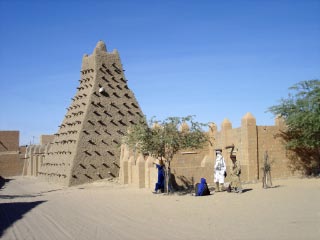
Would you go to Timbuktu?

Sankore Mosque


Mali, located in West Africa, used to be a relatively stable nation and one of its main sources of income was tourists, mainly from western countries. This influx of foreign money didn’t make the majority of the population rich by any means, but it helped maintain at least one industry in the country. As noted in the article, even foreigners had opened businesses catering to tourists.

All this changed, however, after a coup in April of this year. Soldiers deposed the president and Mali hasn’t been the same since. Foreign governments, including the US, France and UK continue to advise citizens against travel to Mali and rebels still control two-thirds of the country. Even power in the government-controlled areas is tenuous. As a result, tourism in the country has dropped dramatically, creating an even bigger economic hardship in a country where many were struggling to begin with. The director of a museum near the capital said the lack of tourists was creating “an economic disaster.”

Political stability is one key to creating a viable economic environment for the citizens of a country. While Mali wasn’t booming to begin with, a military coup is calamitous for people struggling to make a living. Building a state is difficult and takes time and it is the ordinary citizens that struggle the most. With such uncertainty in Mali and multiple groups controlling different parts of the country, the legitimacy of any of them is likely questioned by the population. This adds further to the problems in a country and certainly will contribute to keeping tourists, and their valuable money, away. 

Image from Wikipedia.
Article from The Economist.  


The African Leaders Index

The African Leadership Index is composed of very specific evaluation criterion for the leader of each African state. The Index gives a freedom rating as well as a grade letter based on corruption levels, quality of life statistics, and yearly analysis of failures and successes of the leader. It is very interesting to note that the African Leadership Index does not focus too much on the legislative and economic spheres of each country, but rather the leader and the leader’s failures and successes displayed through policies and major events. Though economic and political highlights are expressed, the main focus of each country is how the states of these spheres have been positively and negatively shaped by each leader.
It was certainly most interesting to read the profiles of the African presidents of Cameroon, the Sudan, Chad, Guinea, Equatorial Guinea, Somalia, Eritrea and Zimbabwe, who all received worse than an “F” letter score, and were essentially banned to the “morgue.”  This condemnation of death with no hope of restoration is an interesting concept of African social spheres; it’s true there are so many intertwining factors, but can we so quickly condemn these nations to be beyond all repair?
It was quite clear that the presidents awarded the highest scores participated in free (or mostly free) elections, did not violently oppose counter parties, maintained relative freedom of the press, and were overall positively consistent in their leadership.
I found the brief profile on Sudan and President Omar Hassan Al-Bashir to be very intriguing, given that President Bashir very recently accepted South Sudan’s referendum for independence. This event is very momentous in the international political sphere, as it is not often that secessionist movements are granted their wishes. It is disheartening to discover that though agreements and compromise have been reached, violence over resources continues as if the issue was never addressed.
--Chelsea O'Neill

Tuesday, September 18, 2012

Glue Sniffing in Kenya

Link to the article: http://www.africanews.com/site/list_message/34861

Even though the article I chose to write about is from 2011, I can confirm that the issue of street children sniffing glue is still as prevalent today in Kenya than ever before.  The article I chose is called "KENYA: Street Kids Sniff Glue to Survive." The article talks about how there are 300,000 street children across Kenya, and some are as young as four or five years old.  In fact, some of these children were born in the streets, while others lived in homes until they were forced into the streets.  Many native Kenyans look at street children as a hinderance to their daily life, and try very hard to avoid them.  This is because the children are often dirty, smelly, and sniffing glue.

Almost every street child in Kenya sniffs glue.  The toxic fumes are addictive, and while they provide an immediate effect to the user, they are also very harmful in the long run.  The effects of huffing glue are lack of appetite, lack of sadness, and lack of coldness - very helpful effects considering most street children are cold, sad, and hungry.  When I was in Kenya, I was surrounded by almost 20 street boys in Kisii who were all sniffing glue.  I even took some of the bottles out of the boys' hands and mouth.  When I saw five year old children sniffing glue, it really made me think about my own life and how I can help these children.  I can't even imagine being a small boy, with no parents, no home, no food, and no hope for a future, trying to merely survive on the streets where nobody cares about you.

However, seeing the street children also brought into question some other topics.  For example, what is the Kenyan government doing to help these children.  The government has set up rehabilitation centers, but they do not seem to be effective as there are still so many street children.  It makes me think that the government has left much of the work to NGO's.  This can cause a problem because most outsiders are unaware of the issue of Kenyan street children and their addiction to glue.  We have been learning in class about the problems of post-colonialism governments in Africa.  How could a government which cannot keep a budget (such as Zaire's government), a government which is so corrupt, a government which destroys infrastructure, even think about helping children in the streets? Of course, Kenyan's government is not as bad as Zaire's once was, but there are common problems throughout most sub-Saharan African governments.

In the future, I will be working in Kenya and trying to help as many street children as I can.  These kids deserve to hope, dream, and live a good life just like many of us are lucky enough to do in America.  Of course, not everyone in America is fortunate enough to live a safe life, and there are many people that live in the streets.  But the lack of action by the Kenyan government compared to the steps the American government has taken to aid the homeless, along with the young ages of Kenyan street children compared to the older age of most American homeless, make me sympathize for the Kenyan street children immensely.  That is why I cannot wait to go back to Kenya and try to fix this major problem, one street child at a time.

The Life and Death of Meles Zenawi


     Though it has been three weeks since it first was reported, the announcement of Meles Zenawi's death still rings in many Ethiopian's ears. For some it is a devastating confirmation of the rumors of Zenawi's health, for others it is a hesitant, but hopeful, relief. Zenawi's nearly twenty year reign is one surrounded by much controversy, humanitarian disapproval, and foreign intimacy.

   Zenawi first appeared in the political sphere when he joined the TPLF (Tigray People's Liberation Front) as a guerilla fighter in attempts to overthrow the then dictatorship of the Derg. Zenawi's party was successful in dissolving the regime, and Zenawi was eventually sworn in as the post cold-war prime minister in 1995. During his regime Ethiopia did experience positive growth. Zenawi was able to oversee significant upward economic mobility for the country; thus making it the leading African country in GDP growth by 2011. Another positive aspect to shine light on is the considerable reduction in infant mortality rates since the beginning of his rule. Zenawi also forged strong bonds between many important nations such as the U.S. and China. Both nations saw him as a valuable ally not only in East Africa, but the whole continent. Though despite this rapid progress, the advancements were not felt by many Ethiopians.

  Zenawi's nearly twenty year reign was notorious to being accused of political oppression, human rights abuses, and marginalization of ethnic groups. Zenawi's regime resembled that of a hybrid regime in that it appeared as a bureaucracy, but the government was actually dictated by him and his supporters who were in the same ethnic group as him. Not only did Zenawi favor his fellow Tigray people in political positions, but also in matters of aid distribution. This caused a never-before-seen distinct national divide between the Tigray, Amhara, Oromo, Ogaden, and Muslim communities. His push for ethnic nationalism over a unified nation created animosity between the ethnic groups, and in part was the reason for the divide with Eritrea. Furthermore, Zenawi in some cases went as far as re-possesing land from peasants of other ethnic groups and selling it to foreign countries. Though thousands have tried to protest and coordinate against the actions of Zenawi, their attempts have always met a forceful, violent response from the regime. When I visited Ethiopia in 2005 (1997 in their calendar) they were holding prime minister elections. Due to a ballot switch, Zenawi, of course, won the election. This sparked wide-spread anger around the country and protestors- who were mainly made up of college students- took to the streets of Addis (the capital). Zenawi ordered the military to open fire in the streets, killing approximately 200 college students and injuring more; Ethiopia was plunged into a state of crisis for several weeks. Also, even though Ethiopia's GDP is regarded as resembling a "China-like" boom, the country is still suffering with wide-spread malnutrition and one of the lowest human development scores.

 But now that he's dead, what is the future of Ethiopia? Human development and a reconnection between the ethnic groups is in many people's minds, but will Zenawi's regime have a lasting effect? This is important for the world to pay attention to because of what it means for US relations, and development in East Africa.


Sunday, September 16, 2012

You Know What Really Grinds My Gears?

-->
You know what really grinds my gears? African Dictatorships.
Since when is it ok for a person to use public funds to finance a life of luxury and extravagance? When did this practice become ‘couth’?
It didn’t.

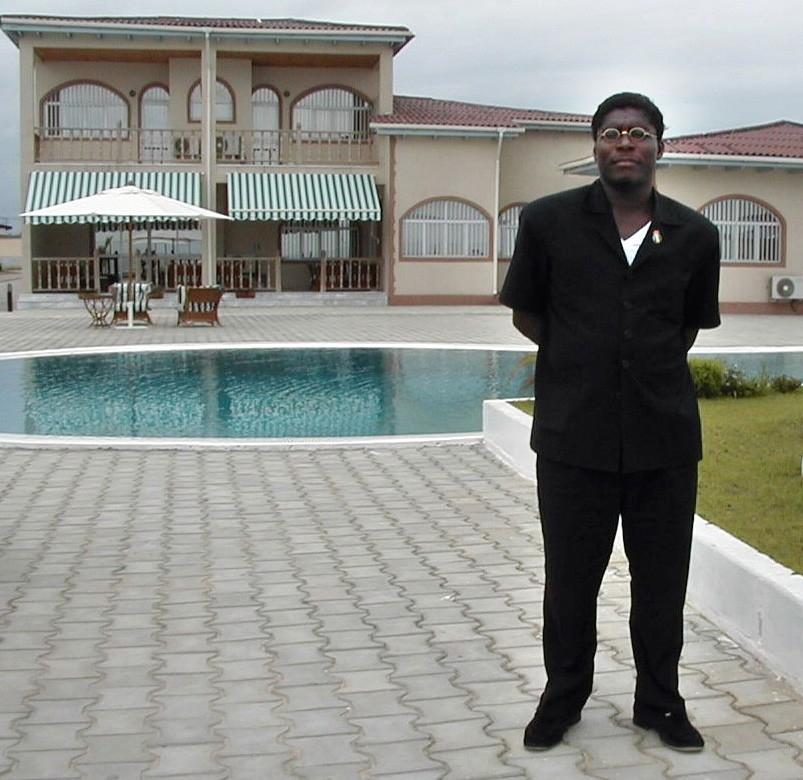
Son of an Equatorial Guinean dictator, Teodorin Obiang is set to purchase a $380 million yacht, that would become world’s 2nd most expensive private boat—and that is just the tip.
The 41-year old son of dictator Teodoro Obiang Nguema Mbasogo, comfortably spends his time in a $35 million mansion in Malibu, with a convoy of luxury cars and a private jet.

It is reported that the younger Obiang has effectively siphoned more than enough money from the public sector to finance his lavish escapades. As his monthly salary is $6,799- it would take 4,600 years for him to pay for the yacht.
But how does this man have keys to the Equatorial Guinean money vault?

O—he happens to be the country’s ‘agricultural minister’ (Even though he spends a majority of his time in California) (It must be for work purposes….) A position that he must have ‘earned’ within his father’s government.

If this doesn’t grind your gears, then you may want to ask one of the 80% of Equatorial Guinean citizens who fall below the poverty line, who will not have keys to the yacht.

This example is just one of the many relating to corrupt African politics.

It is these dictatorships that breed corruption and divide the population.
Effectively, African dictatorships are the seed of current political corruption, and a possible result of prior colonial rule- where Portugal ‘s (In this case) abandonment of Equatorial Guinea left a rat race for the throne.
These dictatorships enable greedy men to take what they want, and give back only what they want.

But do you blame it on the Portuguese? Or on greed?

Whatever the case, I want a yacht too.
African Dictator's Son Orders $380M Luxury Yacht


Courtesy of Lauren Frayer
http://www.aolnews.com/2011/02/28/teodorin-obiang-african-dictators-son-orders-380-million-lux/