 |
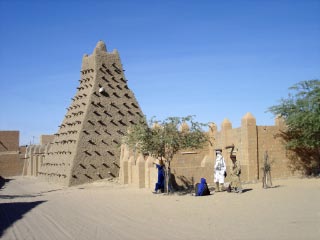
| Sankore Mosque |
Mali, located in West Africa, used to be a relatively stable nation and one of its main sources of income was tourists, mainly from western countries. This influx of foreign money didn’t make the majority of the population rich by any means, but it helped maintain at least one industry in the country. As noted in the article, even foreigners had opened businesses catering to tourists.
All this changed, however, after a coup in April of this year. Soldiers deposed the president and Mali hasn’t been the same since. Foreign governments, including the US, France and UK continue to advise citizens against travel to Mali and rebels still control two-thirds of the country. Even power in the government-controlled areas is tenuous. As a result, tourism in the country has dropped dramatically, creating an even bigger economic hardship in a country where many were struggling to begin with. The director of a museum near the capital said the lack of tourists was creating “an economic disaster.”
Political stability is one key to creating a viable economic environment for the citizens of a country. While Mali wasn’t booming to begin with, a military coup is calamitous for people struggling to make a living. Building a state is difficult and takes time and it is the ordinary citizens that struggle the most. With such uncertainty in Mali and multiple groups controlling different parts of the country, the legitimacy of any of them is likely questioned by the population. This adds further to the problems in a country and certainly will contribute to keeping tourists, and their valuable money, away.
Image from Wikipedia.
Article from The Economist.

